Categories
Bookkeeping

What is Reorder Point ROP System? Formula, Example, and Calculations

rop meaning business

The reorder point (ROP) is the level of inventory which triggers an action to replenish that particular inventory stock. It is a minimum quantity that a company holds in stock, and once inventory falls below this amount, the next order is placed. To calculate the demand average, you need to determine the number of products you can sell in a given period. Now we use historical data to determine the standard deviation of lead time.
rop meaning business

Advertise multiple times to get discounts

Also, if your products are consistently out of stock, you can lose customers’ business permanently. The top reason businesses lose customers is that they cannot meet customer expectations, and a business that lacks inventory doesn’t meet expectations. When your inventory levels reach that reorder point, you must automate purchasing order generation and processing or ask your managers to handle the process manually. Safety stock is the amount of extra inventory you keep just in case you don’t receive a new shipment within the specified lead time. Lead time is how long it takes for you to get the inventory from your suppliers when you order it. The longer it takes for you to receive new stock, the higher the reorder point would be and thus the longer your lead time would be.

Advantages of reorder point

As mentioned previously, the key to forecasting is frequent analysis of sales data, especially with the occurrence of any major business changes. While understanding ROP offers numerous benefits for inventory management, implementing it is not without its challenges. Safety stock acts as a buffer against uncertainties, but setting it accurately requires a nuanced approach that considers several key factors, including the following. Determining the right amount of safety stock is a critical component in the implementation of an effective ROP system, yet it can be a complex task. However, by demystifying ROP, we can transform it from an enigmatic concept into a powerful, practical tool for inventory management. It’s the secret ingredient to ensuring you always have just the right amount of stock at the right time without overfilling your storeroom, or worse, running out.

Difference between Stock Replenish vs reorder point?

  • Either you have to carry that inventory, let’s say from today to tomorrow, or let’s say from this week to next week, or this month to next month – and inventory holding is always costly.
  • For example, if you run an online clothing store and successfully deliver 65, 70, and 45 products in the first three months of the new financial year, respectively.
  • Profitability is a matter of life or death for your E-Commerce business at the moment.
  • By shifting the store’s sales and marketing effort to baseball gloves, the business can earn more net income per dollar of sales, which increases ROR.
  • When your inventory levels reach that reorder point, you must automate purchasing order generation and processing or ask your managers to handle the process manually.

It’s very important to use a model that fits the business scenario of the retailer,” Miao says. If a customer orders three items from three different suppliers, you’ll need to cover separate shipping costs for each. This means you’ll receive notifications when your inventory levels approach the reorder point, ensuring you never run out of stock and are always ready to meet your customers’ demands. It’s important to note that the reorder point calculation assumes that demand and lead time are relatively constant. If they are subject to significant variability, the safety stock component becomes even more critical to prevent stockouts. Regular monitoring and adjustment of these inputs are essential to maintain an effective reorder point strategy over time.

Cheapest Squarespace Shipping: 2024 Ultimate Guide

A reorder point is a fairly simple concept, but successful implementation requires attention to nuance and in-depth details about the suppliers, business, and customers. Your lead time will be higher if your supplier is overseas than in a domestic or in-house production facility. The delivery time of your shipment may vary based on the quality of your order. The ROP is the minimum stock level of a specific product before you need to add more inventory. Warehousing bulk merchandise over long periods can cut into profit margins. It can help you increase your business numbers, ensure client retention, and stand out.

  • Storing more inventory than what can be sold in a timely fashion is not a productive use of capital.
  • The reorder point ensures timely replenishment, while safety stock protects against stockouts and disruptions in the supply chain.
  • It can thus also be viewed as the last time to replenish stock to avoid a stockout.
  • But when you know your reorder point, you’re less likely to have too much cash wrapped up in inventory.
  • Calculating the reorder point involves considering several inputs and factors related to demand, lead time, and desired service level.
  • Unlike dropshipping, retail arbitrage involves buying products from other retailers and reselling them at a higher price.

To calculate lead time demand, you multiply the lead time (in days) for a certain product by the average number of units sold each day. Lead time demand is the amount of stock you would sell during the period it takes for your inventory to arrive from the supplier. Demand for products doesn’t cease when you run out of inventory, after all, so you need to find how many items you would sell if the stock were to run out. If you avoid reordering products at the right time, your customers can reduce the potential revenue.

rop meaning business

  • However, once you analyze the pattern of a product, you’re ready to put the variable together.
  • Unlike digital ads, ROP doesn’t provide a definitive method to track your ad’s performance, but you can use your creativity!
  • As a result, businesses can allocate more resources to other retail activities such as marketing.
  • You can track the reorder point and ensure your customers don’t face a poor customer experience while purchasing a product from your retail website.
  • If you only carry enough stock to meet current demand, you’ll need to adjust your ROP formula to reflect the absence of safety stock.

If you run out of stock, you’ll be unable to make sales until new inventory arrives. By contrast, ordering stock too soon is detrimental because you have to store that stock, which increases your holding costs. For instance, if an online store relies solely on EOQ, it could find itself with very low inventory levels during periods of high demand, leading to lost sales. Conversely, if it relies solely on ROP, it could end up with excess inventory during periods of low demand, increasing storage costs. Managing inventory is an essential aspect of many businesses, and knowing when to reorder stock can make the difference between a seamless operation and costly interruptions.

Is a universal reorder point strategy suitable for all inventory items?

rop meaning business

Learn its importance, how to calculate it, and tips for efficient stock management. ShipBob’s platform doesn’t just help with inventory control and forecasting, but generates powerful analytical reports covering all areas of your business. You can get inside the numbers and find new ways to improve supply chain rop meaning business efficiency. Easyship makes it easy to track inventory and gain visibility of all your shipments. Our all-in-one software automatically updates inventory after each shipment, helping you know exactly when to rebuy more stock. Integrating your inventory and shipping processes is a huge time-saver for businesses.
rop meaning business

For fresh suppliers or in case of many unknowns, it might be a good idea to buffer this number higher by a small amount until the new supplier performance is determined. ShipBob helps ecommerce brands manage inventory, forecast demand, pack orders, reduce shipping costs, and deliver on customer expectations. Once you https://www.bookstime.com/ maintain the inventory level and the customer orders a delivery, your delivery team can use Upper to ensure on-time, fuel-efficient deliveries for business success. Once you calculate reorder point and equip the buffer stock, you can ensure on-time deliveries for your customers and a quality customer experience.

Categories
Bookkeeping

Opportunities to free cash from your balance sheet

long term liabilities

This form of debt can give you the boost you need to stay afloat or grow your business. This strategy can protect the company if interest rates rise because the payments on fixed-rate debt will not increase. Companies will have a number of financial obligations and business owners know how important it is to keep a track of these obligations. C) Furthermore, if the cost of the new house is less than the sale price of the old property, only the remaining amount from the sale proceeds will be taxed if not invested in specific bonds.

What is a current liability?

The current ratio is another financial ratio impacted by long-term liabilities. This ratio gives investors an idea of the company’s ability to pay its short-term obligations with short-term assets. Within this context, if a company’s long-term liabilities come due soon, they would be reclassified as current liabilities, which could negatively impact the current ratio. Bonds payable represent the later scenario i.e. financial obligations of a company which have a specified return and repayment date.

Discover Wealth Management Solutions Near You

  • The current portion of long-term debt is separated out because it needs to be covered by liquid assets, such as cash.
  • The current portion of long-term debt is the portion of a long-term liability that is due in the current year.
  • Any liability that’s not near-term falls under non-current liabilities that are expected to be paid in 12 months or more.
  • Long-term liabilities or debt are those obligations on a company’s books that are not due without the next 12 months.

The stockholders’ equity section may include an amount described as accumulated other comprehensive income. This amount is the cumulative total of the amounts that had been reported over the years http://inthepress.ru/press/p192338.html as other comprehensive income (or loss). Long-term liabilities, which are also known as noncurrent liabilities, are obligations that are not due within one year of the balance sheet date.

  • A liability is something that a person or company owes, usually a sum of money.
  • Classifying liabilities into short and long term is necessary as it helps users of the accounting information to determine the short term and long term financial strength of a business.
  • When managing long term liabilities, one of the key strategies businesses often adapt is striking a balance between short term and long term liabilities.
  • The calculation of a company’s enterprise value (EV) takes into account the company’s market capitalization, short-term and long-term debt, and cash.

Capital Gain Tax: Here’s How To Reduce Liability From Sale Of Property And Other Assets

Businesses try to finance current assets with current debt and non-current assets with non-current debt. Bill talks with a bank and gets http://byturen.com/blog/vse-o-kashah a loan to add an addition onto his building. Later in the season, Bill needs extra funding to purchase the next season’s inventory.

long term liabilities

11 Financial is a registered investment adviser located in Lufkin, Texas. 11 Financial may only transact business in those states in which it is registered, or qualifies for an exemption or exclusion from registration requirements. 11 Financial’s website is limited to the dissemination of general information pertaining to its advisory services, together with access to additional investment-related information, publications, and links. More specifically, liabilities are subtracted from total assets to arrive at a company’s equity value. You repay long-term liabilities over several years, such as 15 years. Moreover, you can save a portion of business earnings to go toward repaying debt.

  • Current liability accounts can vary by industry or according to various government regulations.
  • This potential financial burden puts pressure on organizations to consider the environmental impact of their operations and make sustainable decisions.
  • Other long-term liabilities might include items such as pension liabilities, capital leases, deferred credits, customer deposits, and deferred tax liabilities.
  • This is how most public companies usually present Long-Term Liabilities on the Balance Sheet.
  • Companies will have a number of financial obligations and business owners know how important it is to keep a track of these obligations.

Accounting Close Explained: A Comprehensive Guide to the Process

long term liabilities

Conversely, poor management of these liabilities can invite criticism and potential backlash, affecting the public’s trust in the business. Such surprising liabilities can stem from legal action, like lawsuits, or changes in governing regulations—factors beyond the control of a company. A lawsuit may command the payment of a hefty https://www.hipergroup.com/page.php?id=127 sum, rapidly expanding a firm’s liability. For example, stricter environmental regulations may need significant investment in new technology or penalties for non-compliance. In practice, a higher leverage ratio is generally seen as risky because it means a substantial portion of the company’s assets has been funded by debt.

long term liabilities

Adam Hayes, Ph.D., CFA, is a financial writer with 15+ years Wall Street experience as a derivatives trader. Besides his extensive derivative trading expertise, Adam is an expert in economics and behavioral finance. Adam received his master’s in economics from The New School for Social Research and his Ph.D. from the University of Wisconsin-Madison in sociology. He is a CFA charterholder as well as holding FINRA Series 7, 55 & 63 licenses.

Categories
Bookkeeping

CrowdStrike and Microsoft: What we know about global IT outage

how to do the books for a small business

“I always have so many things to work on for my clients, but I need to work on bettering my business, too. It helped me set my goals, manage them, and see them objectively.” Recommended by Sherrill, “The 12 Week Year” is a self-help business book that redefines your “year” as 12 weeks in order to help you be more productive and reach goals faster. “This is a great business book small business bookkeeping because it helped me find new ways to appreciate my clients and value our relationship,” says Sherrill. “It’s not about what you’re trying to get from people, but what you’re trying to give to them.” With practical techniques such as Susan Jeffers’ 10-Step Positive Thinking Process, this book can help readers overcome passivity and negativity, even on the most challenging days.

how to do the books for a small business

The 29 best business books to read in 2023, ranked by Goodreads members

While this guidebook is aimed at those building a technology startup, there are plenty of ideas that you can take away from “Zero to One,” regardless of your industry. Use this book to challenge your preconceived notions about what startup or small business life looks like. “Zero to One” has been recognized as one of the best startup books, so if you haven’t yet read this book, you should consider doing so. The startup process laid out in “The Startup Owner’s Manual” is taught at elite universities such as Stanford, Berkeley, and Columbia. Luckily, you can get those lessons without paying for tuition, making this one of the best startup books on our list. This list includes some of the best startup books to help you get your business off the ground, find VC funding, be a supportive leader, and stay inspired—no matter the problems you’re facing.

You need it to do your taxes

  • If you’re incorporating new programs or ones that have variable costs, like paid social media ads, keep a close eye on their performance.
  • As such, their accounting can often be managed with simpler systems, sometimes even manual record-keeping or basic accounting software.
  • Generally, accrual basis is the recommended accounting method and more aligned with generally accepted accounting principles.
  • One of the biggest mistakes made in business isn’t in marketing, product, or execution—it’s in hiring.
  • In his book, he teaches readers how to accept failure, learn from it, and use it to grow and understand where your weaknesses are so you can improve.
  • From there, the total pay is determined with the applicable taxes and withholdings.

A major part of registering your business and opening up shop is choosing a business entity. This will govern how you pay taxes as a small-business owner, but also what kind of liability protection you have in case something goes wrong and how you’ll structure your business. A bookkeeper’s work is applicable across many https://www.bookstime.com/articles/full-charge-bookkeeper different types of industries — after all, every business needs to track and optimize its finances. However, to help market your business and set it apart amongst the competition, you may decide to specialize in a specific industry. Even as the nature of business changes, one job that is always in demand is bookkeeping.

  • It’s a practical guide for anyone wanting to start a business on a tight budget and is ideal for those with limited resources but unlimited ambition.
  • Individuals who are successful bookkeeping professionals are highly organized, can balance ledgers accurately, have an eye for detail and are excellent communicators.
  • If staying ahead of industry disruptions is your game, this one’s vital.
  • If you choose the right book for your reading needs, you can find a business book to help you achieve your next goal.
  • Bookkeeping focuses on recording and organizing financial data, including tasks such as invoicing, billing, payroll and reconciling transactions.
  • She concludes people behave in a way that reflects the way they view their abilities.

Bonus Business Book: The Ultimate Guide to Starting Your First Ecommerce Business by Tomas Slimas

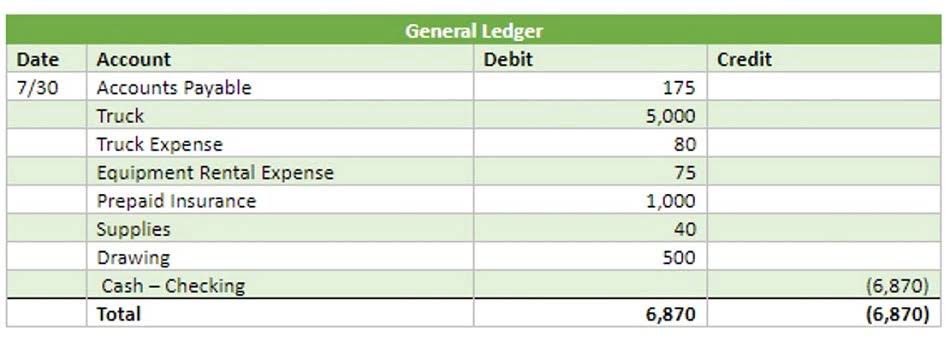
Double-entry accounting enters every transaction twice as both a debit and a credit. Your business’s books are balanced when all of the debits equal (or cancel out) all of the credits. And since it takes equity, assets and liabilities — on top of expenses and income — into account, it typically gives you a more accurate financial snapshot of your business. Bookkeeping involves the day-to-day recording of financial transactions, which includes documenting sales, expenses, payments, and receipts. Bookkeepers ensure that every financial transaction is accurately recorded in the business’s books, keeping an organized system to track financial activities. Accrual accounting requires the most accounting knowledge and is more time consuming for small business owners.

The E-Myth Revisited: Why Most Small Businesses Don’t Work and What to Do About It by Michael E. Gerber

Opening a separate business bank account will prevent your personal and business finances from becoming muddled. Manually recording transactions by hand is the most time-consuming option for recording transactions. When you record transactions by hand, manually account for each transaction and calculate totals.

  • It’s laced with intriguing insights into startups and emphasizes the importance of definitive and monopolistic businesses.
  • Meanwhile, the problems have also hit payment systems, banking and healthcare providers around the world.
  • Small businesses often work with tax advisors to help prepare their tax returns, file them and make sure they’re taking advantage of small-business tax deductions.
  • Also, this business book will show you which master traits you already possess, and how to develop the ones you don’t.
  • The E-Myth Revisited is a must-read for tech entrepreneurs, exploring how companies with an innovative product can self-sabotage by not considering how that innovation translates into business success.

Chillpreneur: The New Rules for Creating Success, Freedom, and Abundance on Your Terms by Denise Duffield-Thomas

By recording cash transactions when the money actually changes hands, you can simply cross-reference your bank statements with your bookkeeping records to ensure accuracy. Online bookkeeping uses software that takes care of most of the calculations and data entry for you. A program like QuickBooks cloud accounting software, for example, can help you track income and expenses much faster than you could with a traditional ledger.

how to do the books for a small business

Establish your bookkeeping system

The 3 golden rules of bookkeeping to follow